UV-Lampe UV: nützliche Eigenschaften und vielfältige Einsatzmöglichkeiten
24 Apr, 2024
Von hqt
Eine UV-Lampe (UV) ist ein elektrisches Gerät, das ultraviolette Strahlung im UV-Spektrum erzeugt. Sie werden für verschiedene Zwecke verwendet, einschließlich Luft, Wasser, und Flächendesinfektion, sowie Materialverarbeitung in verschiedenen Branchen.
Zu den Hauptmerkmalen von UV-Lampen gehören::
Strahlungstyp : UV-Lampen können anhand ihrer Strahlungswellenlänge in UVA eingeteilt werden (320 nm zu 400 nm), UVB (280 nm zu 320 nm) und UVC (100 nm zu 280 nm). Jede Strahlungsart hat ihre eigenen Eigenschaften und Anwendungen.
Leistung : Die Leistung der UV-Lampe bestimmt, wie viel Strahlung sie erzeugen kann. Dies ist ein wichtiger Parameter, der die Wirksamkeit der Desinfektion und Behandlung von Materialien beeinflusst.
Lebensdauer : Die Lebensdauer von UV-Lampen bestimmt, wie lange sie unter normalen Einsatzbedingungen Strahlung erzeugen können. Eine lange Lebensdauer reduziert die Kosten für den Lampenwechsel und gewährleistet einen kontinuierlichen Betrieb des Gerätes.
Desinfektionseffizienz : Die Effizienz einer UV-Lampe bei der Desinfektion von Luft, Wasser oder Oberflächen hängt von der Gestaltung ab, Leistung und Art der Strahlung. Die Auswahl einer Lampe mit den entsprechenden Eigenschaften trägt dazu bei, den erforderlichen Desinfektionsgrad zu erreichen.
Sicherheit : UV-Strahlung kann bei direktem Kontakt schädlich für Haut und Augen sein. daher, Es ist wichtig, Lampen mit entsprechenden Sicherheitsmerkmalen auszuwählen, B. Schutzgitter oder Leitungsschutzschalter, beim Öffnen des Gerätegehäuses.
Größe und Form : UV-Lampen gibt es je nach Anwendung in verschiedenen Größen und Formen. Einige Lampen sind für den Einbau in Geräte oder Systeme vorgesehen, während andere tragbar sein und in einer Vielzahl von Umgebungen verwendet werden können.
Diese Eigenschaften bestimmen die Funktionalität und Anwendbarkeit von UV-Lampen in verschiedenen Anwendungen. Bei der Auswahl einer Lampe, Es ist wichtig, die Anforderungen einer bestimmten Anwendung zu berücksichtigen und eine sichere Verwendung zu gewährleisten.
Ein Überblick über die verschiedenen Arten von UV-Lampen (UVA, UVB, UVC) und ihre spektralen Eigenschaften.
UV-Lampen werden je nach Wellenlänge der Strahlung in drei Haupttypen eingeteilt: UVA, UVB und UVC. Jeder Typ hat seine eigenen spektralen Eigenschaften und Anwendungen.
UVA-Lampen :
Wellenlänge: aus 320 nm zu 400 nm.
Spektrale Eigenschaften: UVA-Strahlung liegt im längerwelligen Teil des ultravioletten Spektrums und hat die niedrigste Energie der drei UV-Typen.
Anwendungen: UVA-Strahlung wird häufig bei kosmetischen und medizinischen Eingriffen wie der Phototherapie eingesetzt, Photodynamische Therapie, und Kunststoffpolymerisation in der Zahnheilkunde. Es wird auch in verschiedenen industriellen Prozessen wie dem Trocknen und Aushärten von Klebstoffen verwendet.
UVB-Lampen :
Wellenlänge: aus 280 nm zu 320 nm.
Spektrale Eigenschaften: UVB-Strahlung liegt im mittelwelligen Teil des ultravioletten Spektrums und hat eine höhere Energie als UVA.
Anwendungen: UVB-Strahlung wird bei medizinischen Eingriffen wie der Behandlung von Psoriasis eingesetzt, Ekzeme und andere Hautkrankheiten. UVB-Lampen werden auch zur industriellen Polymerisation und Trocknung von Materialien eingesetzt.
UVC-Lampen :
Wellenlänge: aus 100 nm zu 280 nm.
Spektrale Eigenschaften: UVC-Strahlung liegt im kurzwelligen Teil des ultravioletten Spektrums und hat von allen UV-Arten die höchste Energie.
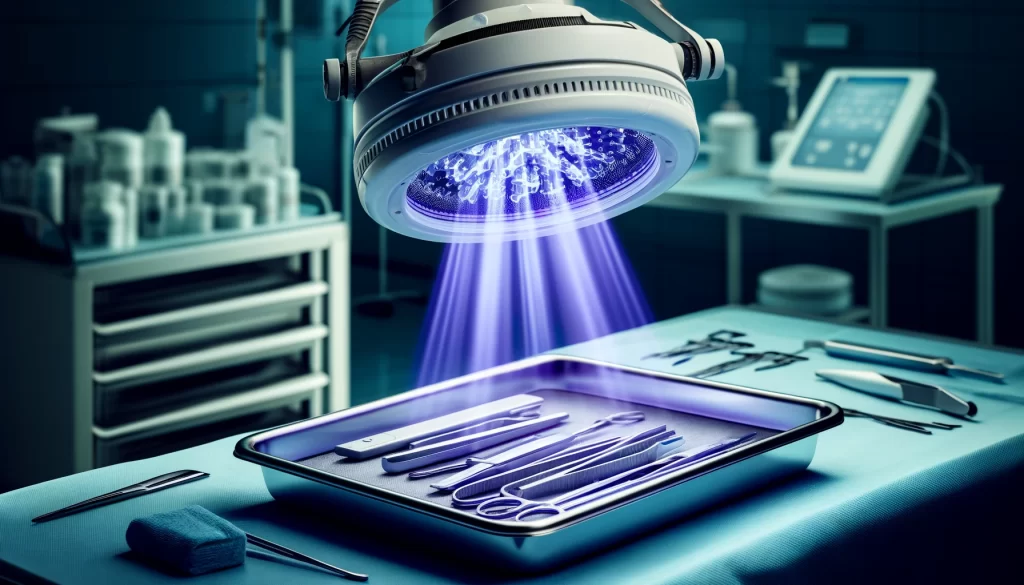
Anwendungen: UVC-Strahlung ist zur Desinfektion und Sterilisation am wirksamsten. Es zerstört Bakterien, Viren und andere Mikroorganismen, Daher ist es in der Medizin unverzichtbar, Lebensmittelindustrie, Wasserreinigung, sowie in der Luft- und Flächendesinfektion.
Allgemeiner Vergleich:
UVA-Strahlung hat die geringste Energie und dringt tief in die Haut ein.
UVB-Strahlung hat eine mittlere Energie und kann Sonnenbrand und Hautschäden verursachen.
UVC-Strahlung hat die höchste Energie und ist bei der Desinfektion und Sterilisation am wirksamsten, Es wird jedoch durch die Ozonschicht der Erde blockiert und erreicht ohne spezielle Geräte nicht die Planetenoberfläche.
Vorteile der Verwendung von UV-Lampen
UV-Lampe UV – wirksam bei der Sterilisation und Desinfektion.
Die Wirksamkeit von UV-Lampen bei der Sterilisation und Desinfektion hängt von mehreren Faktoren ab, einschließlich der Art der Strahlung (UVA, UVB, UVC), Lampenleistung, Expositionszeit, Abstand von der zu behandelnden Oberfläche, und Eigenschaften der Mikroorganismen.
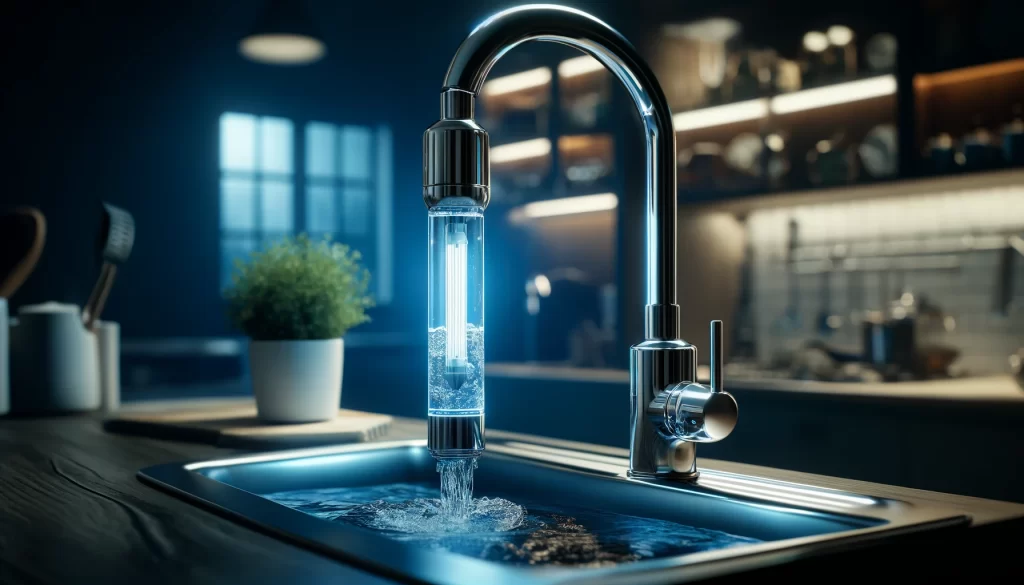
UVC radiation : UVC-Lampen sind aufgrund ihrer kurzwelligen Natur bei der Desinfektion und Sterilisation am effektivsten. Sie können in die Zellen von Mikroorganismen eindringen und deren DNA oder RNA schädigen, was sie zur Fortpflanzung unfähig macht. UVC-Strahlung ist hochwirksam bei der Zerstörung von Bakterien, Viren, Pilze und andere pathogene Mikroorganismen.
Leistung und Belichtungszeit : Je höher die Leistung der UV-Lampe und desto länger die Belichtungszeit, desto größer ist die Wahrscheinlichkeit einer vollständigen Desinfektion bzw. Sterilisation. Die optimalen Einstellungen hängen von der jeweiligen Anwendung und dem erforderlichen Desinfektionsgrad ab.
Abstand zur zu behandelnden Oberfläche : UV-Strahlung ist auf kurze Distanz wirksam, Daher ist es wichtig, die Lampen relativ zur zu behandelnden Oberfläche oder zum zu behandelnden Objekt richtig zu positionieren. Dadurch können Sie das Potenzial der UV-Strahlung maximieren und eine gleichmäßige Desinfektion gewährleisten.
Eigenschaften von Mikroorganismen : Einige Mikroorganismen sind möglicherweise resistenter gegen UV-Strahlung als andere, Daher kann die Wirksamkeit der Desinfektion je nach Art des Mikroorganismus und seinem Entwicklungsstadium variieren.
Bei richtiger Anwendung und mit den richtigen Parametern, Ultraviolettlampen sorgen für ein hohes Maß an Sterilisation und Desinfektion, Dies macht sie zu einem wichtigen Werkzeug in der Medizin, Lebensmittelindustrie, Wasserreinigung, sowie in der Luft- und Oberflächenreinigung.
Der Einsatz von UV-Lampen im Vergleich zu herkömmlichen Reinigungsmethoden.
Die UV-Lampe hat im Vergleich zu herkömmlichen Reinigungsmethoden ihre eigenen Vorteile und Einschränkungen, abhängig von der konkreten Anwendung und den Desinfektionsanforderungen. Hier sind einige wichtige Punkte zum Vergleich:
Wirksamkeit : Die UV-Desinfektion sorgt für eine wirksame Abtötung von Bakterien, Viren, Pilze und andere Krankheitserreger ohne den Einsatz von Chemikalien. Während einige traditionelle Methoden, wie zum Beispiel die Verwendung von Chlor- oder Alkohollösungen, kann auch wirksam sein, sie können Rückstände hinterlassen oder unangenehme Gerüche haben.
Sicherheit : Für die UV-Desinfektion ist der Einsatz von Chemikalien nicht erforderlich, Dies macht es sicherer für die Umwelt und den Menschen. Es hinterlässt keine Rückstände und verändert weder die chemische Zusammensetzung der behandelten Oberflächen noch des Wassers. Jedoch, Es müssen Vorkehrungen getroffen werden, um Haut und Augen vor direkter UV-Strahlung zu schützen.
Bearbeitungszeit : Die UV-Desinfektion erfordert in der Regel weniger Zeit als einige herkömmliche Methoden, insbesondere bei der Behandlung von Luft oder Oberflächen. Es kann kontinuierlich erfolgen, ohne dass auf die Trocknungszeit oder die Abnutzung chemischer Lösungen gewartet werden muss.
Anwendungen : UV-Desinfektion wird häufig im Gesundheitswesen eingesetzt, Lebensmittelverarbeitung, Wasseraufbereitung, Luft- und Wasseraufbereitung, und häusliche Umgebungen. Es kann in einer Vielzahl von Umgebungen und Oberflächen wirksam sein.
Verwendung : UV-Lampen erfordern eine ordnungsgemäße Installation und regelmäßige Wartung, um einen kontinuierlichen Betrieb und maximale Effizienz zu gewährleisten. Herkömmliche Methoden sind möglicherweise einfacher anzuwenden, Für die Behandlung großer Flächen oder Volumina kann jedoch ein höherer Aufwand erforderlich sein.
Im Allgemeinen, Der Einsatz von UV-Lampen hat gegenüber herkömmlichen Reinigungsmethoden viele Vorteile, insbesondere im Bereich Luft, Wasser- und Flächendesinfektion. Jedoch, Dabei sind spezifische Einsatzbedingungen und Verarbeitungserfordernisse zu berücksichtigen.
Abschluss
UV-Lampen spielen in der modernen Welt eine wichtige Rolle, Bereitstellung einer wirksamen Desinfektion und Sterilisation in verschiedenen Lebensbereichen. Hier sind die Hauptaspekte ihrer Bedeutung:
Sicherheit und Hygiene : UV-Desinfektion trägt dazu bei, Sicherheit und Hygiene in Gesundheitseinrichtungen zu gewährleisten, Lebensmittelverarbeitung, öffentliche Plätze und Häuser. Es kann Bakterien effektiv zerstören, Viren, Pilze und andere Krankheitserreger, Verringerung des Risikos der Ausbreitung von Infektionen und Krankheiten.
Umweltfreundlich : Im Gegensatz zu einigen herkömmlichen Desinfektionsmethoden, UV-Lampen kommen ohne Chemikalien aus, wodurch sie umweltfreundlicher werden. Sie hinterlassen keine Rückstände und belasten die Umwelt nicht.
Effizienz und Zuverlässigkeit : Die UV-Desinfektion bietet eine hohe Effizienz und Zuverlässigkeit bei der Zerstörung von Mikroorganismen auf Oberflächen, im Wasser und in der Luft. Es ist eine der wirksamsten Methoden zur Bekämpfung von Infektionen und zur Gewährleistung der Sicherheit der öffentlichen Gesundheit.
Breites Anwendungsspektrum : UV-Lampen können in verschiedenen Branchen eingesetzt werden, einschließlich Medizin, Lebensmittelindustrie, Wasseraufbereitung, Luftaufbereitung, Pharmazeutika, und auch zu Hause. Ihre Vielseitigkeit macht sie zu einem integralen Bestandteil moderner Sicherheits- und Hygienesysteme.
Innovation und Entwicklung : Neue Technologien und Innovationen im Bereich der UV-Desinfektion werden ständig weiterentwickelt, was eine Verbesserung der Effizienz ermöglicht, Sicherheit und Benutzerfreundlichkeit von UV-Lampen. Dazu gehört auch die Entwicklung effizienterer Lampen, Intelligente Steuerungs- und Überwachungssysteme, und Integration mit anderen Technologien.
Gesamt, UV-Lampen spielen eine Schlüsselrolle bei der Aufrechterhaltung der Sicherheit, Hygiene und Gesundheit in der heutigen Welt, und ihre Bedeutung nimmt mit den Fortschritten in der Technologie und dem Bewusstsein für die Bedeutung der Verhinderung der Ausbreitung von Infektionen weiter zu.
 [lsft_native_dropdown]